Why AI Is Becoming a Permanent Part of Your TV Experience
Artificial intelligence is weaving itself into nearly every corner of modern tech — and your living room is no exception. As Pocket-lint highlights, AI is no longer a novelty feature in smart TVs. It’s not optional, it’s not a temporary trend, and — whether you like it or not — it’s here to stay. From LG and Samsung to TCL and Hisense, the industry is moving full speed toward AI‑powered television.
Smart TVs are already collecting data; adding AI simply accelerates an industry direction that manufacturers have no intention of reversing.
The LG Copilot Controversy: A Sign of the Times
In late 2025, LG TV users woke up to find that a Microsoft Copilot app had appeared on their webOS TVs — unannounced and impossible to delete. The feature was framed as a convenience shortcut, but users saw it as an unwanted AI intrusion. The backlash was immediate and widespread. Only after significant public pressure did LG backtrack and allow users to remove it.
But here’s the real story: even though LG reversed course, the industry as a whole isn’t backing away from AI in TVs.
Samsung, TCL, and Others Are All-In on AI
Samsung publicly announced at CES 2025 that AI features — including built-in Copilot integrations — would become standard across its upcoming TV lineup. Manufacturers are investing enormous amounts of money into AI-enhanced picture processing, AI assistants, upscaling, and even on-device AI engines. This trajectory is not slowing down.
- AI upscaling to sharpen low-resolution content
- AI-based image correction for lighting, motion, and color
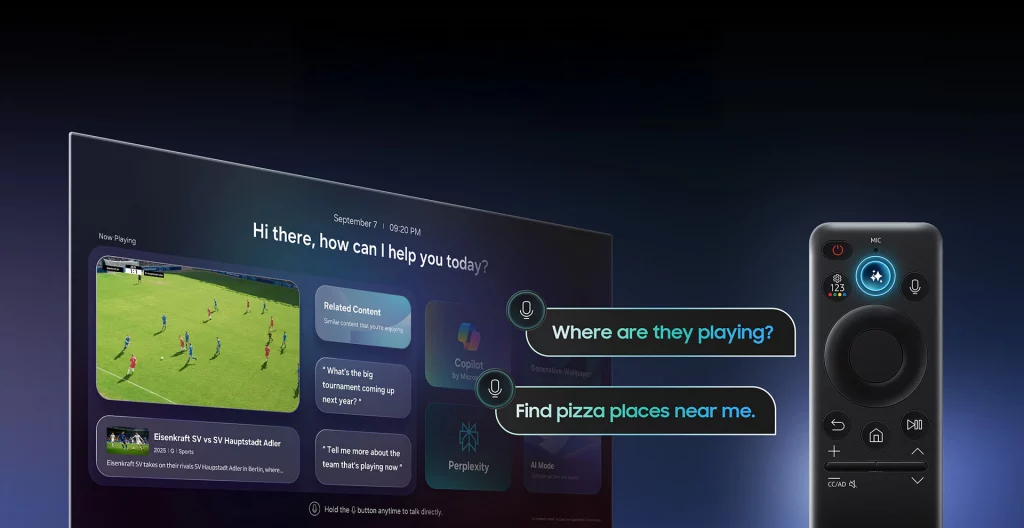
- AI assistants to help users navigate apps, settings, and content
- AI-driven recommendations based on viewing patterns
Why TV Makers Won’t Turn Back

According to Pocket-lint, even if consumer complaints temporarily slow AI rollouts, the financial incentives are simply too powerful. AI enhances content recommendation engines, supports upselling, powers targeted ads, and provides data insights that manufacturers can monetize. Put simply, AI is too profitable to remove.
Add to that the fact that:
- Every major tech company is embedding AI tools across devices
- Smart TV hardware increasingly relies on AI-driven processors
- AI plays a key role in 4K/8K upscaling and motion smoothing
- Consumers have shown a growing appetite for personalized experiences
Whether users want more AI or not, the industry has already decided.
You Might Actually Like Some of It
Pocket-lint points out that despite fears around privacy and unwanted apps, some AI features genuinely improve the experience: clearer video, smoother sports motion, snappier UI performance, better dark-scene processing, and more accurate color grading. These upgrades are no longer exclusive to premium sets — they’re quickly trickling down to mid‑range and budget TVs too.
- AI motion detection improves clarity during fast sports
- AI tone mapping enhances HDR content
- AI ambient adjustments optimize picture settings in real-time
- AI assistants help with switching inputs, finding apps, or summarizing content
But Yes — Privacy Is Still a Big Concern
Smart TVs already track viewing habits, usage patterns, and sometimes even physical movements. Pocket-lint warns users to fully understand their TV’s privacy features and disable tracking where possible. AI will only amplify this data collection unless manufacturers adopt stronger safeguards — something currently driven more by regulation than goodwill.
Final Thoughts: AI Isn’t Going Anywhere
AI in smart TVs isn’t a trend; it’s the next platform shift. Manufacturers have committed to AI-powered experiences — for picture quality, personalization, revenue, and connected device ecosystems. Even with consumer pushback, the move is irreversible.
The best thing TV owners can do now? Learn how their device uses AI, disable the features they don’t want, and embrace the ones that genuinely make watching TV better.