

The Latest Warning Sign in AI Governance
The rapid evolution of generative AI has sparked extraordinary innovation — but also a cascade of safety issues. According to reporting from the Observer, recent decisions by major AI developers to loosen content restrictions have raised alarms among AI ethicists, mental health researchers, and digital safety experts. Their concern isn’t about any single feature. It’s about what these decisions signal: a growing willingness to relax safety boundaries in pursuit of growth.
This shifting posture exposes a gap between the public messaging of AI companies — “safety first” — and the practical reality of product rollouts that may introduce new, untested risks at scale.
“The shift… is a dangerous leap in the wrong direction.”
— Digital harms attorney speaking to the Observer about the risks to emotionally vulnerable users
When AI Attachment Becomes a Safety Risk

The Observer details the case of 16‑year‑old Adam Raine, whose family alleges that excessive reliance on an AI chatbot — including during moments of crisis — contributed to his emotional deterioration. AI systems, regardless of guardrails, are not mental health tools, yet they are increasingly treated as such by vulnerable users.
Experts warn that relaxing boundaries around emotionally charged interactions amplifies a known hazard: user attachment to AI agents. This is not a hypothetical. Emotional dependence on AI companions has already been documented across several platforms, and safety researchers have repeatedly stressed the need for strict constraints when young or distressed individuals interact with generative systems.
Yet despite these warnings, the Observer reports that companies are moving toward more permissive systems that could deepen parasocial dynamics rather than mitigate them.
A Conflict Between Stated Values and Product Decisions
AI companies frequently position themselves as safety‑driven organisations, citing teen protection, harm mitigation, and responsible AI principles. But the Observer notes a growing contradiction: even as new age‑estimation tools and safeguards are announced, content boundaries are simultaneously being loosened. Critics argue that this reflects an industry struggling between two competing incentives:
- Safety commitments, intended to protect minors and vulnerable users
- Commercial pressures that reward engagement, differentiation and market expansion
This tension, researchers warn, increases the likelihood of safety slippage — especially when decisions are rushed or insufficiently tested. “Growth before guardrails” is how several experts summarised the pattern to the Observer.
The Bigger Issue: AI Companies Are Outrunning Regulation
Generative AI has already become a fixture of everyday digital life — from education and entertainment to enterprise workflows. But as the Observer highlights, regulatory frameworks have not kept pace with the sudden appearance of AI systems capable of influencing human psychology, emotional states, and interpersonal behaviour.
Unlike social media platforms, which gained regulatory scrutiny after harm had already occurred, generative AI systems are still operating in a grey zone with minimal oversight, broad adoption, and enormous behavioural influence.
This is particularly concerning when companies experiment with new forms of engagement that researchers say could have profound long‑term effects. For example:
- Increased emotional dependency on conversational agents
- Blurred lines between human‑AI relationships
- Potential for unsafe recommendations during crises
- Difficulty distinguishing where “assistant” ends and “companion” begins
A Cultural Turning Point
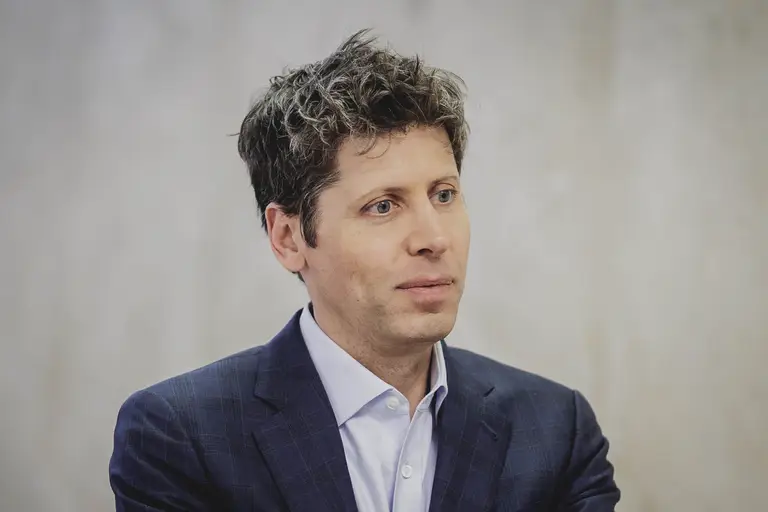
The Observer frames the latest shift as a symbolic break from OpenAI’s founding vision — a non‑profit mission “to benefit all humanity,” prioritising safety over monetisation.
Today, the company — like many in the space — operates in a highly competitive, commercial environment. And critics argue that decisions which once required extensive harm‑testing are now being accelerated to capture new markets and keep pace with rivals.
“Despite mounting evidence of harm, the company is choosing growth over safety.” — The Observer’s reporting on expert criticisms
What This Means for the Future of AI Safety
The alarm from researchers is not about a single feature, and it’s not prudishness or technophobia. It’s a demand for caution — and for development cycles that treat safety research as a first‑order priority, not an afterthought.
- AI companies need stronger internal governance, especially around high‑risk features.
- Regulators must accelerate AI policy to match the pace of commercial deployment.
- Developers must prioritise real‑world harm data, not just theoretical safeguards.
- Independent oversight should play a larger role in risk assessment.
Most importantly, as experts told the Observer, any system that can influence human emotions or mental states requires far stricter controls than current industry norms provide.
Final Thoughts
Generative AI is no longer a novelty — it’s a psychological and cultural force. The latest controversies underscore a crucial truth: without robust safety boundaries, AI systems will drift toward the incentives of scale, engagement, and profit. And in that drift, vulnerable users may bear the cost.
AI safety isn’t optional. It’s the foundation on which every other benefit of AI depends. The industry must build accordingly.