

The Three Lions Turn to Technology
As England prepare for their next World Cup campaign, artificial intelligence is becoming a major part of their high‑performance toolkit. Reporting shared via MSN, summarising BBC Sport’s insights from inside the England camp, highlights how AI is supporting analysis, training optimisation, and match preparation — all with the aim of giving England a critical advantage on the world stage.
Whether improving tactical clarity, reducing errors, or helping players perform under pressure, AI is reshaping the way England prepare. But the national team isn’t alone — football itself is entering a new era built on data, machine learning, and intelligent coaching support.
“AI is powering plans for next summer’s World Cup,” according to MSN’s summary of BBC Sport’s reporting.
AI‑Driven Tactical Intelligence
In the England setup, AI is being used to analyse match footage and detect patterns that human analysts may miss. With the ability to process huge volumes of data in minutes, AI can reveal insights on pressing triggers, defensive vulnerabilities, build‑up sequences, and positional weaknesses — offering a more detailed picture of both opponents and England’s own style.
This deeper tactical understanding means coaches can tailor game plans precisely to upcoming opponents. Where once entire days were spent combing through video, AI now enables rapid, evidence‑driven decision‑making ahead of each fixture.
Smarter Training Through Data
AI is increasingly used to optimise training loads, player recovery, movement patterns, and even injury‑risk prediction. With the fine margins of tournament football often coming down to physical sharpness, these insights help keep players at peak performance.
Training simulations powered by AI can also help players rehearse match scenarios, giving them a cognitive edge when making split‑second decisions under pressure.
Analysing Opponents Like Never Before

England’s analysts are now able to pull data on teams from across the world, identifying patterns such as set‑piece routines, goalkeeper dive tendencies, pressing traps, and attacking preferences. This gives the Three Lions a clearer view of precisely where to exploit weaknesses.
With limited preparation time between matches during a tournament, this rapid analysis could prove decisive.
A Psychological Edge Through AI
AI tools are also being used to monitor wellbeing, stress levels, and cognitive performance, helping coaches spot dips in concentration, nerves, or fatigue. These insights allow earlier intervention and more personalised support — invaluable in the pressures of a World Cup environment.
For a team with a history of penalty heartbreak, AI‑enhanced psychological preparation may be one of the most transformative additions.
AI Football Coaches: The Next Evolution of the Game
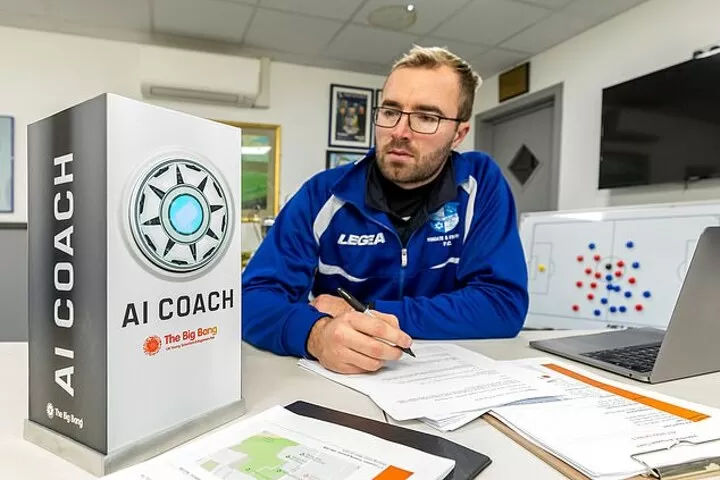
While England integrate AI behind the scenes, other clubs have already begun taking bold steps by employing **AI football coaches** — showing how the future of the sport may blend machine intelligence with traditional tactical expertise.
One of the most notable examples comes from **Wingate & Finchley FC**, a seventh‑tier London club that made global headlines after partnering with The Big Bang Fair to appoint an AI coach. This AI system, powered through an Amazon Alexa interface, was designed to provide tactical support, suggest formations, analyse opponents, and even offer substitution advice during matches.
- AI suggests formations and tactics — responding to real‑time information from coaching staff.
- It learns over the season by analysing match data and outcomes to improve future recommendations.
- It can propose substitutions based on match situations, such as red cards or tactical shifts.
The AI coach had its first competitive outing in a crucial match against Whitehawk FC, where Wingate & Finchley secured a 1–1 draw — allowing the club to jokingly declare that their new digital assistant was “unbeaten”. The system recommended a 4‑3‑3 formation and provided live tactical feedback from the dugout.
Although still experimental, this pioneering example highlights how AI may soon supplement coaching teams at all levels — helping clubs with limited budgets access sophisticated tactical analysis previously reserved for elite sides.
Could AI Really Deliver World Cup Glory?
AI won’t replace elite footballers — but it can help them think faster, prepare smarter, and perform better. From tactical modelling and fatigue forecasting to penalty optimisation and psychological readiness, AI offers England a toolkit that past squads could only dream of.
Combine that with the rise of AI coaching systems in the wider football ecosystem, and it’s clear that the sport is rapidly evolving. Whether this will finally be the factor that helps England lift their first World Cup since 1966 remains to be seen — but the Three Lions are entering the fight with more technological firepower than ever before.